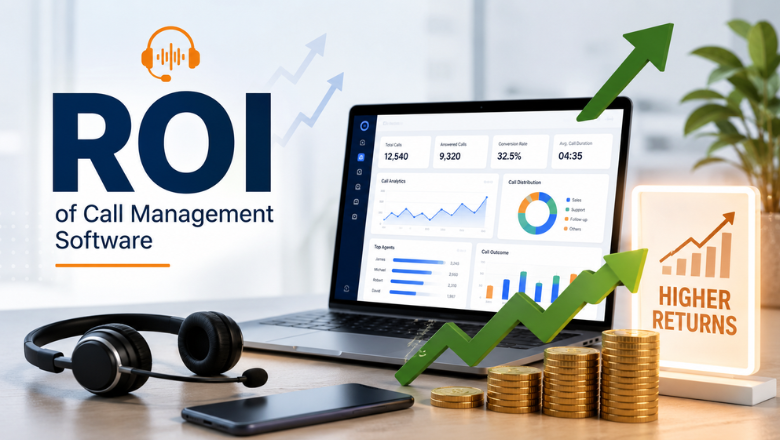
Even though a sales team could be making hundreds of phone calls in one day, it would be missing out on precious leads. It is not because they lack call volume but because of what occurs in between the calls. Leads are ignored, follow-ups are missed, customer information is kept scattered in spreadsheets, and management cannot determine who is performing. This is where call management software starts showing its real business value. Rather than viewing calling as a separate activity, it brings together calls, leads, follow-up, agent performance, and other metrics within a single process.
Sales productivity apps like Swift Dial can assist businesses in automating repetitive calling processes, tracking leads, monitoring team performance, and getting more visibility into their conversions. The important question, however, is not simply whether the software has useful features. It is whether those features can generate enough operational and sales improvement to justify the investment.
Your Team is Making Calls—But Where is the Money Being Lost?
Let us take an example of an organization that produces 500 leads weekly. These leads can be either generated through digital marketing campaigns or referred from various sources such as websites, referrals, and databases. They manually distribute leads, make calls to potential customers, document their results in spreadsheets, and attempt to keep track of when they need to follow up next.
Even good salespeople will eventually miss something.
A capable call management software reduces this leakage by creating a structured process around every prospect. For example, Swift Dial has capabilities that include capturing of leads, lead distribution, call management, follow-up, and reporting within the same CRM. This software also captures leads through Facebook, Instagram, and Google Ads.
The ROI begins when fewer valuable leads disappear between enquiry and conversion.
What Does Call Management Software Actually Do?
The call management software enables companies to efficiently organize, manage, and track customer and prospect calls in a systematic manner. Rather than having different call logs, lead sheets, follow-up schedules, and reporting activities, all these aspects of the sales process can be managed within one unified system.
For businesses that rely heavily on telecalling, the application will end up being one of the critical productivity tools because it will make the entire process less administrative.
An app like Swift Dial is a good example of an efficient call management application.
The Real ROI Starts with Time Your Salespeople Get Back

Suppose an agent spends only 90 seconds manually finding a number, checking previous notes, updating a spreadsheet, and scheduling the next follow-up after each conversation. Across 80 calls, that becomes two hours of non-selling activity.
Multiply that across 20 agents, and the hidden productivity cost becomes substantial.
This is why calling software for sales can produce value without immediately increasing headcount. By automating dialing, centralizing lead information, scheduling follow-ups, and structuring call results, the agent can use more of their time talking to prospects.
For example, Swift Dial auto dialer is a combination of automated dialing, scheduling calls, managing leads, call recording, and call reporting.
How Do You Actually Calculate the ROI of Call Management Software?
Businesses should avoid measuring ROI by call volume alone. Making 30% more calls has little value if conversion rates remain unchanged.
A better calculation considers additional revenue and operational savings generated after implementation against the total software investment.
ROI (%) = [(Financial Benefit − Software Cost) ÷ Software Cost] × 100
Consider this simple illustrative example:
| ROI Factor | Before Software | After Software |
| Calls per Agent/Day | 60 | 85 |
| Leads Followed Up | 70% | 92% |
| Monthly Conversions | 100 | 130 |
| Admin Time per Agent | 2 Hours/Day | 1 Hour/Day |
| Missed Follow-ups | High | Lower |
| Reporting | Manual | Automated |
The calculation should include additional sales, time saved, reduced administrative work, lower lead leakage, and any avoided staffing costs. That gives a much more realistic picture of whether the best call management software for your business is producing measurable returns.
More Calls Don’t Guarantee Sales—Better Follow-Ups Do
A prospect who says, “Call me on Friday,” isn’t a lost lead. But they can quickly become one if nobody remembers that conversation on Friday.
This is where CRM software for telecalling becomes particularly valuable. Every lead can have a status, notes, previous interactions, and a planned next action. Agents no longer have to remember hundreds of conversations independently.
A good sales CRM software creates continuity between calls. It enables another authorized team member to understand where the conversation stopped and what should happen next.
For teams looking for the best CRM for telecalling, follow-up management should therefore carry as much weight as dialing speed.
Don’t Spend On Leads You Can Never Take Care Of
Companies invest a lot in Google, Meta, social media, marketplaces, and other sources of leads. However, most companies use advertising ROI calculations without analyzing how fast the leads are actually contacted.
This is a significant problem.
CRM solutions for lead management allow companies to capture, organize, assign, and follow up on leads until they convert into something.
Swift Dial CRM can ingest leads from Meta and Google sources and route them into calling workflows, reducing dependence on manual lead entry.
Using Swift Dial for lead management means the value of call management software extends beyond calling itself, it can help businesses protect the money already being spent to generate leads.
Call Tracking Turns Guesswork into Management Decisions
Managers often ask, “Why did sales drop this month?” Without accurate calling data, the answers can become subjective.
One agent says the leads were poor. Another says customers weren’t answering. Marketing says the sales team wasn’t following up quickly enough.
The top call tracking software should provide enough visibility to replace these arguments with useful data. Managers can examine call outcomes, lead stages, campaign performance, response patterns, and agent activity.
Swift Dial provides call insights and reporting, source-wise performance information, call outcomes, lead-stage visibility, and team activity monitoring.
That makes reporting another important ROI source: better information can lead to better decisions.
Can Call Center Management Software Reduce Operating Costs?
Recruiting more sales representatives is no doubt costly. Wages, training, supervision, hardware, and other overhead expenses will escalate.
Before adding new personnel to the payroll, companies must find out if the current staff is being used effectively.
The use of call center management software could automate tasks, distribute leads, schedule follow-ups, and give visibility into how the staff is performing. An efficient group that has more qualified interactions per agent may prove more economical than recruiting more sales reps.
This applies especially to small and midsize companies where each incremental operational cost impacts the margins.
The objective isn’t necessarily to reduce staff. It is to remove work that doesn’t require a salesperson’s judgment or communication skills.
What is CRM Software in BPO?
In a BPO environment, CRM software acts as the central system used to organize customer information, interactions, follow-ups, lead stages, and agent activities. When integrated with calling capabilities, it gives agents the context needed before and after customer conversations.
For high-volume operations, call center management software can also give supervisors better visibility into agent workloads and performance.
A specialized CRM software for telecalling is, therefore, useful for BPOs because calling and customer information remain connected rather than operating through separate systems.
Which CRM is Best for Call Centers?
Different businesses will need different CRMs. This depends on factors such as call volumes, team size, nature of the sales cycle, integration needs, report requirements, budget, and whether the company deals with inbound or outbound calls or both.
When one asks, “Which is the best CRM for call centers?” it is imperative to consider practical features instead of just going by the most number of features.
Among the features to be considered are lead management, automatic dialing, follow-up scheduling, call tracking, reporting, ROI-based management, integration needs, usability, scalability, and support.
Swift Dial focuses on SIM-based call management, lead management, team tracking, and CRM functions for outbound and tele-calling teams.
Sales CRM Software vs Traditional Call Management
A traditional phone system enables communication. Modern sales CRM software helps businesses manage what happens before, during, and after that communication.
| Capability | Traditional Calling | Call Management + CRM |
| Making Calls | Yes | Yes |
| Lead Records | Separate | Centralized |
| Follow-up Tracking | Manual | Structured |
| Call Reporting | Limited | Detailed |
| Lead Assignment | Manual | Automated/Managed |
| Agent Monitoring | Difficult | Centralized |
| Sales Pipeline | Separate Tool | CRM-Based |
| Performance Analysis | Manual | Real-Time/Automated |
This is also why comparing a dedicated telecalling CRM directly with a broad platform such as Salesforce CRM can be misleading. The better question is which platform matches your actual workflow, budget, integrations, and team requirements.
When Does Call Management Software Pay for Itself?
The answer becomes clearer when businesses examine where money is currently being wasted.
If salespeople spend hours updating spreadsheets, leads routinely miss follow-ups, managers cannot measure agent performance, or expensive advertising enquiries aren’t contacted quickly, call management software has multiple opportunities to create financial value.
The strongest returns usually come from a combination of productivity gains rather than one dramatic change:
- More productive calling hours.
- Faster lead response.
- Fewer missed follow-ups.
- Better utilization of existing agents.
- Reduced manual reporting.
- Improved lead accountability.
- Better campaign visibility.
These improvements can compound. Saving five minutes once is insignificant; saving several minutes across thousands of monthly lead interactions is not.
Is Swift Dial Worth Considering for Telecalling Teams?
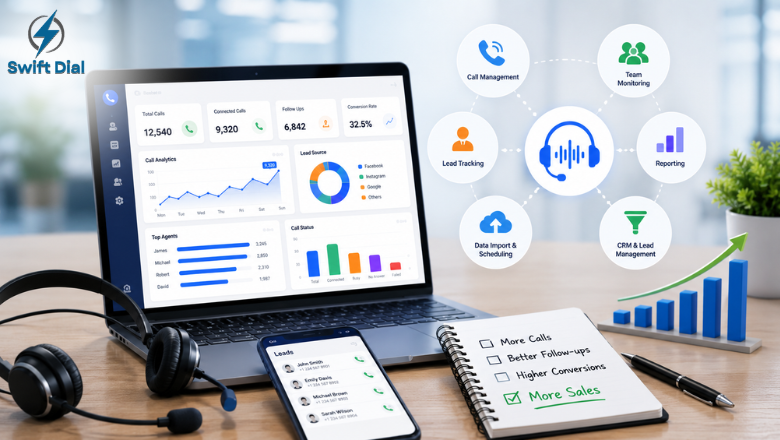
For businesses whose revenue depends heavily on outbound calls and lead follow-ups, Swift Dial brings together call management, lead tracking, team monitoring, reporting, data import and scheduling, and CRM capabilities. It also helps in capturing leads from Facebook, Instagram, and Google.
That combination makes it relevant for businesses searching for calling software for sales, CRM software for lead management, top call tracking software, or the best CRM for telecalling.
Try Swift Dial free for one month
Is Call Management Software Worth the Investment?
For a business making only a handful of customer calls each week, advanced software may not produce enough value to justify additional complexity. But once calling becomes a major part of sales, lead generation, collections, customer engagement, or support, manual processes can become expensive surprisingly quickly.
The best call management software should help your team spend less time dialing, searching for customer information, updating spreadsheets, and preparing reports and more time having conversations that can produce revenue.
Whether you’re evaluating sales productivity tools, CRM software for lead management, or dedicated calling software for sales, measure the decision against outcomes rather than features alone.
For telecalling-driven businesses, A call management software provides a way to bring calling, leads, follow-ups, team activity, and reporting into a more organized workflow. The real ROI comes when that organization translates into more productive agents, fewer lost leads, lower operational waste, and ultimately more conversions from the opportunities your business already has.
FAQs
1. What is call management software?
It helps businesses manage calls, leads, follow-ups, and customer interactions in one place.
2. Which CRM is best for call centers?
The best CRM offers calling, lead tracking, automation, reporting, and easy follow-up management.
3. What is CRM software in BPO?
It helps BPO teams manage customer data, calls, leads, and follow-ups efficiently.
4. How does CRM software for telecalling help sales?
It automates calling tasks, organizes leads, and helps agents complete follow-ups faster.
5. Is call management software worth the investment?
Yes, it can save time, reduce missed leads, improve productivity, and support higher conversions.